

Much has been written and more has been heard by various people about the political journey of Alexandra Sdoukou. But what is the truth? Was she PASOK? Has she also been SYRIZA or has she been a conscious New Democrat since she was 19? Let’s look at the evidence:
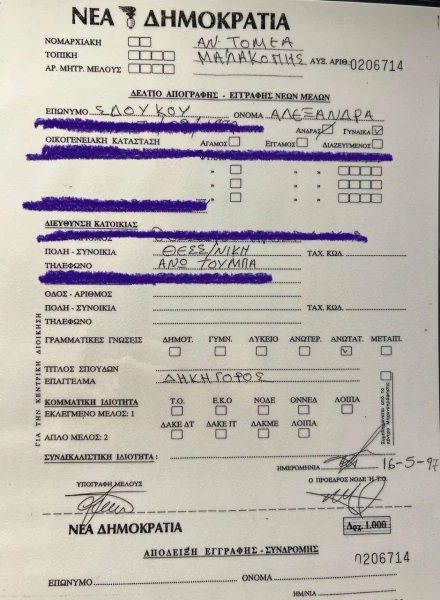
Alexandra Sduku, member of the New Democracy Party since 1997
The debate about “diversity” and political movements came back to the forefront in the wake of reports that Alexandra Sdoukou coming from a different political area and later joining New Democracy.
However, the available data show a different picture. According to information, Sduku has been a registered member of ND since 16 May 1997, when she was 19 years old. In addition, in the period 2004-2009 she worked as adviser to ministers in the government of Kostas Karamanlis, before continuing her career as a permanent employee at the Ministry of Energy.
The secondments to Maniatis and Lafazanis
The main source of the relevant discussion seems to be the presence in the office of the then minister Giannis Maniatis, where she was placed by posting as a permanent employee of the ministry. There he was, among other things, responsible for the hydrocarbons file, at a time when the subject was at the heart of the country’s energy plans.
It is worth noting, however, that there was a similar official collaboration later on with Panagiotis Lafazanis, who also chose her for his political office when he took over the Energy portfolio under the Syriza government.
The distinction between official and party roles
The question being asked by those following the case is whether the choice of a civil servant by ministers from different governments is a sign of a change in party identity or whether it is simply a recognition of his or her technocratic and ministerial competence.
To date, those who claim that Sduku was politically linked to PASOK have not publicly presented evidence showing her participation in party events, party organs or other political activities in that area. Instead, the only evidence they cite relates to her tenure in the cabinet office of Maniatis, which in itself can hardly be considered sufficient evidence of political affiliation.


