

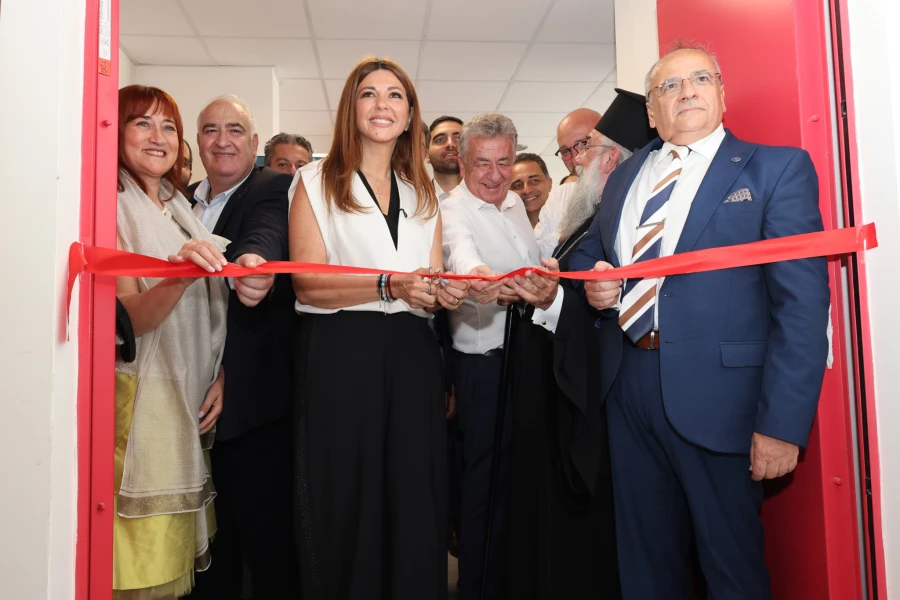
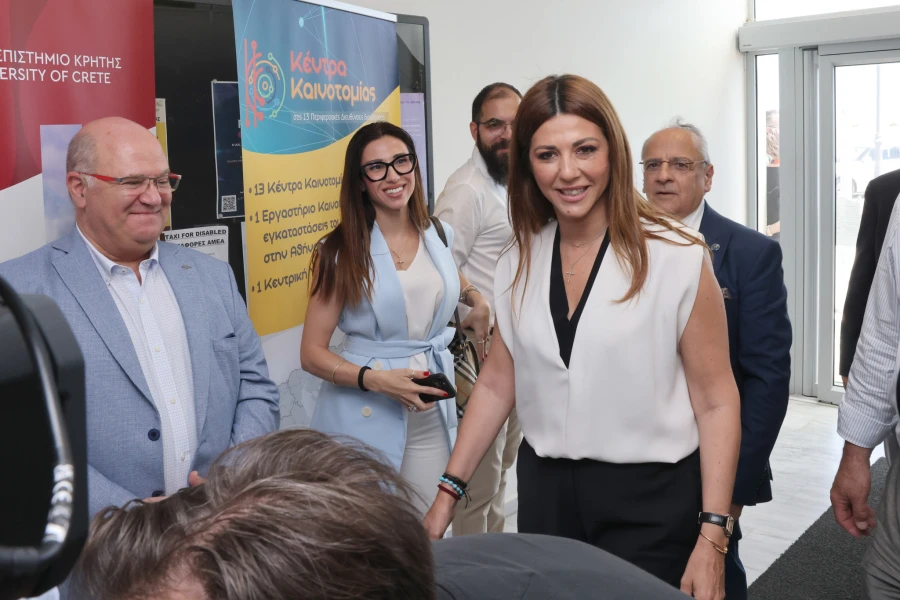
The fifth Innovation Center, out of a total of 13 to be established nationwide was inaugurated today in Heraklion, the Minister of Education Sofia Zacharaki.
The Innovation Center is housed in the facilities of the Department of Computer Science at the University of Crete, on the Vouton Campus in Heraklion.
Ms. Zacharaki, on the occasion of the inauguration, reiterated the goal for these Centers to offer specialized educational programs and innovative digital tools, directly supporting the needs of both the university and the school/educational communities of Crete.
In her remarks, Ms. Zacharaki referred to strengthening innovation in education, as well as the overall improvement of the school environment, placing particular emphasis on the role of technology in modern education and noting that the goal is for students to acquire meaningful digital skills. As he emphasized, “children must become familiar with the ‘language’ of programming, the use of tools such as 3D printers (3D printers), as well as with modern applications that they will utilize in the learning process.”
Regarding the Innovation Centers being implemented with funding from the Recovery Fund, Ms. Zacharaki emphasized that they will enhance students’ knowledge through organized educational scenarios and collaboration with specialized scientists. As noted, teachers will also be given the opportunity to make use of their schools’ equipment, while at the same time integration with interactive whiteboards —of which there are already more than 1,300 in Heraklion—as well as the 6,500 robotics kits already in schools, as stated by the Minister of Education, Religion, and Sports.
Next, the minister referred to the human resources in education, emphasizing the importance of permanent appointments, which in Heraklion have exceeded 2,000 since 2019, while she also made special mention of the issue of housing for substitute teachers, which she described as critical.
“I consider it extremely important to begin the discussion regarding the accommodation and housing of female and male deputy ministers” Ms. Zacharaki said emphatically, adding that she believes “we must support every young person who responds to our call and comes with enthusiasm and dedication to serve public education as a vocation.”
Sofia Zacharaki also spoke about the changes being promoted with regard to school textbooks, announcing that teachers are selecting textbooks through the multiple-textbook system, with the goal of having textbooks from first grade through the first year of high school updated by September 2027. As she noted, many of the existing textbooks have remained unchanged for two decades.
At the same time, Ms. Zacharaki, in her remarks, emphasized the need for a safe and modern school, noting that last year 15 schools in Heraklion were renovated, while work is already underway to renovate eight more, as part of the “Marietta Giannakou,” with plans to continue these interventions nationwide through 2029, covering more than 2,000 schools across the country.
In closing, the minister emphasized that education cannot be approached in a piecemeal manner, but requires a “holistic approach that combines technology, infrastructure, and human resources”. As she noted, “the goal is to promote equal opportunities so that every child, regardless of where they live, has access to a quality education.”
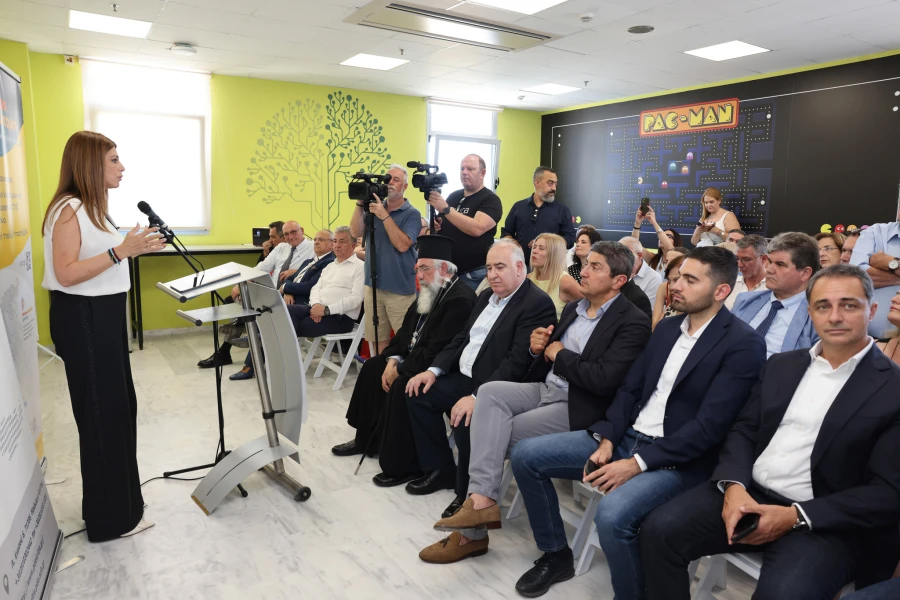
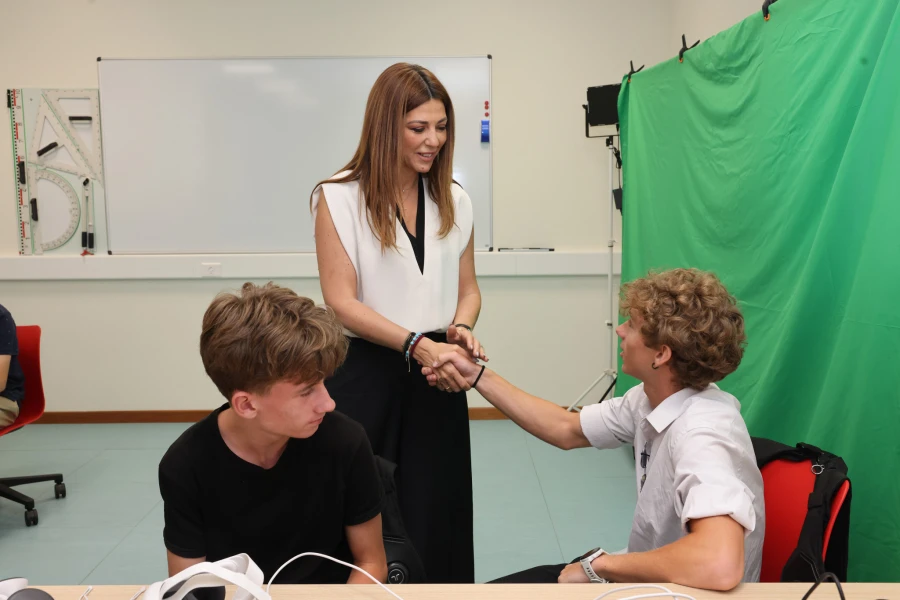
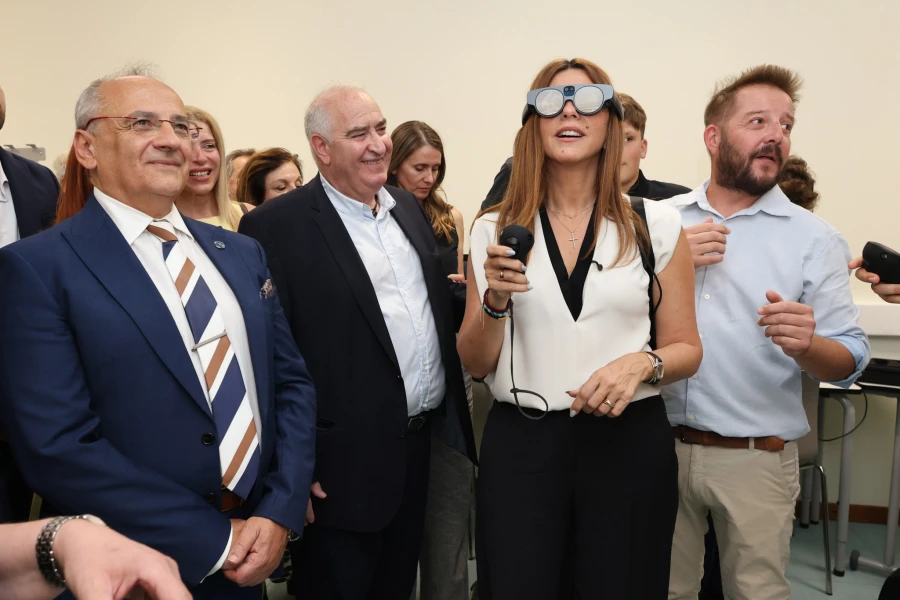
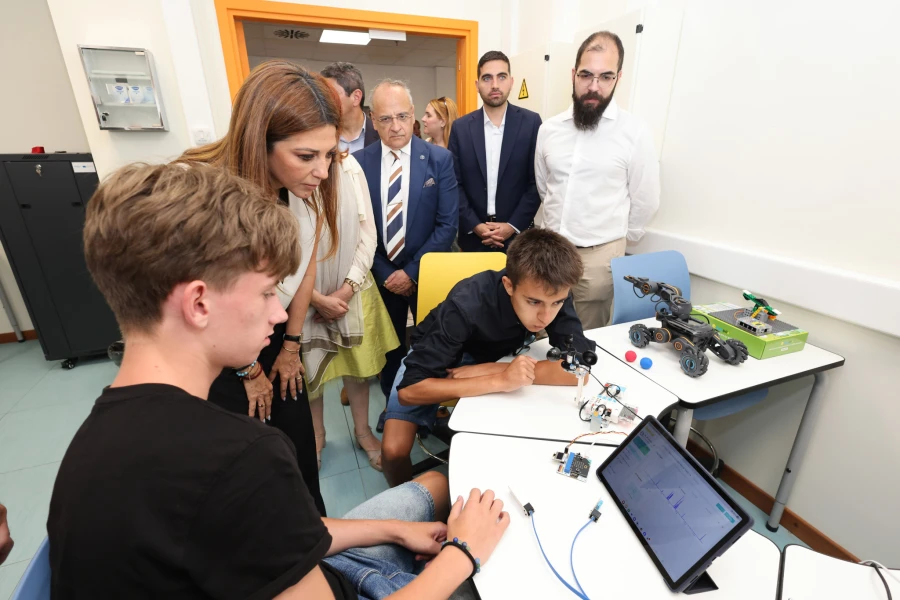
The inauguration ceremony was presided over by Archbishop Eugenios of Crete, and attendees included, among others, the Regional Governor of Crete, Stavros Arnaoutakis, the Secretary General of the Ministry of Education, Religious Affairs, and Sports, local members of parliament, the rectors of the University of Crete and ELMEPA, the president of the Institute of Technology and Education (ITE), and education officials, among others. Immediately following the inauguration, students from the European Education School participated in activities using the Center’s equipment in the main areas, demonstrating advanced educational robotics and artificial intelligence systems, human-robot interaction technologies, as well as augmented reality systems and digital fabrication, 3D scanning, and 3D printing technologies.
Earlier, Ms. Zacharaki visited the Regional Directorate of Education of Crete, where she met with the director, Manolis Kartsanakis.
Subsequently, Sofia Zacharaki, according to the schedule, is scheduled to visit the new student dormitories currently under construction on the Vouton Campus of the University of Crete, an institution that has joined the “Marietta Giannakou” program; these facilities will operate as Onaseia starting this coming September, along with KEDASY. He will also meet in Heraklion with Archbishop Eugenios of Crete, Regional Governor Stavros Arnaoutakis, and the Mayor of Heraklion, Alexis Kalokairinos. In the afternoon, the Minister of Education, Religious Affairs, and Sports will hold a meeting with officials from the New Democracy party and the Heraklion Electoral District Steering Committee, while she will also attend an event on the University of Crete’s internationalization strategy and outreach.


