

The government has announced a package of half a billion euros in support, building on the surplus.
The emergency measures announced by Kyriakos Mitsotakis include, new subsidy on diesel motoring and fuel, but also support measures for renters or low-income pensioners, possibly extending or increasing the subsidy amounts they have been receiving since last year every November.
With a package of eight new measures, the government is attempting to return the fiscal surplus to society, with an emphasis on tackling the energy crisis, boosting incomes and managing private debt.
On the energy side, the subsidy on diesel has been extended for May, with an aid of 20 cents per litre. The cost of the measure amounts to €55 million and concerns owners of diesel vehicles. At the same time, the 15% subsidy on fertilisers continues until August, at an additional cost of €23 million and about 250,000 farmers beneficiaries.
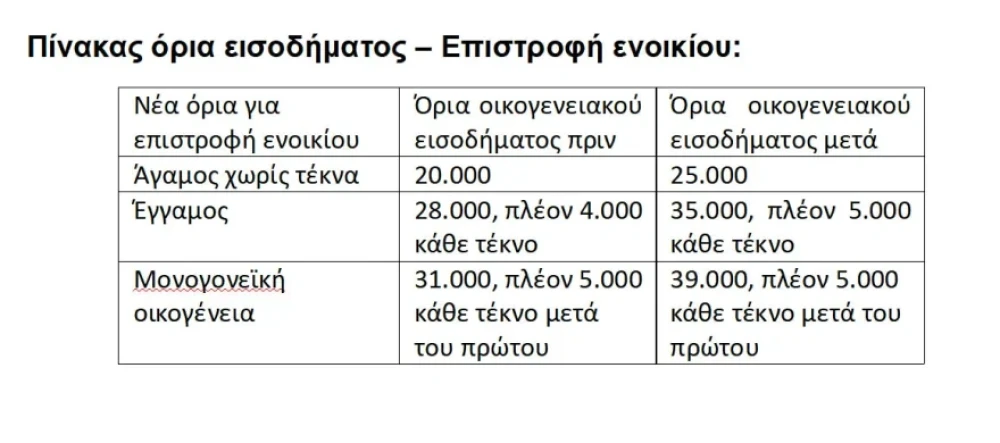
To support households, the income thresholds for rent reimbursement are increased: from 20.000 to €25,000and from €28,000 to €35,000, while for single-parent families the threshold rises from €31,000 to €39,000, with an increase of €5,000 per child. The measure, costing 25 million euros, is estimated to cover an additional 70,000 tenants, bringing the total to 1 million.
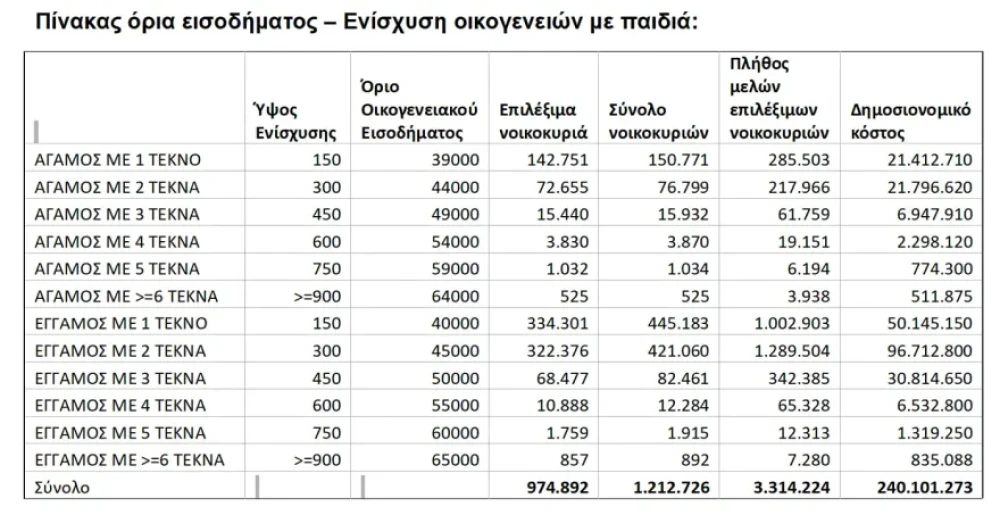
In addition, extraordinary financial aid of €150 per child is planned for the end of June, at a total cost of €240 million. euros and around 975,000 beneficiary households.
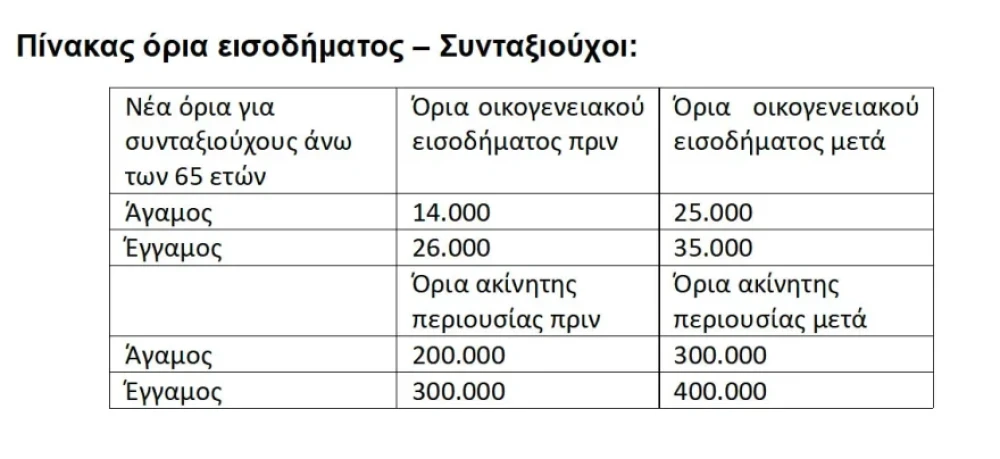
For pensioners, aid is increased from 250 to 300 euros net every November, while income and asset criteria are broadened. The measure covers pensioners, uninsured seniors and disabled people, at a cost of €198 million and an additional 420,000 beneficiaries, bringing the total to 1.87 million.
Special attention is also given to private debt. The possibility of lifting the seizure of bank accounts under certain conditions, extending the out-of-court mechanism to cover debts from 5,000 to 10,000 euros, and the inclusion of old unregulated debts in a regulation of up to 72 instalments are proposed. These interventions concern around 1.3 million individuals and 284,000 legal entities, with total debts of €95.3 billion.
The package of measures aims to alleviate economic pressures and support wider social groups at a time of increased needs.
Kyriakos Mitsotakis’ statement on the support measures
The National Statistics Authority has just announced the final fiscal data for 2025 and these are very encouraging. At the same time, however, I am well aware that the difficult international conditions are increasing the daily burden of the already increased cost of living for our households.
For this reason and I insist that any collective success should gradually translate into individual prosperity.
In fact, the national economy is holding up and doing better than expected. But the stress of supermarket stress, children’s expenses, more expensive fuel and care for the elderly remain, everywhere in Europe and in our own country.
Today I am therefore announcing a package of relief regulations aimed at the entire population as a dividend of the progress the state is returning to society.
This is a surplus that has resulted from a prudent economic policy that limits unnecessary government spending and combats tax evasion, that boosts growth by supporting income, and that reduces both taxes and the public debt.
A surplus, in fact, larger than we had estimated, which is extremely rare even among the most powerful economies.
This is why our targeted interventions appeal to the many, without ever challenging the fiscal balance. They thus raise another “dike” in the current crisis, especially for families with children, pensioners, tenants, farmers, businesses, but also for millions of citizens with arrears.
Specifically, the following will apply in the coming period:
– The 20-cent subsidy for diesel on the network is extended for the month of May. An arrangement that, obviously, relieves businesses and consumers.
– The subsidy of fertilizers with 15% of the value of their purchase invoices also continues until August. A measure that potentially affects 250,000 farmers, as well as legal entities active in the primary sector.
– Extraordinary aid is provided to families with children, amounting to 150 euros per child. This will be given without any application at the end of June and will be addressed to almost 1 million households, with more than 3 million members, almost 80% of families with children.
– In parallel, the aid for low pensioners, uninsured elderly and disabled people is increased to 300 euros net, paid every November on a permanent and annual basis. While its perimeter is expanded, now covering 1.9 million beneficiaries, i.e. 85% of pensioners over 65 years of age.
– Income limits are also increased so that one rent per year is returned to more people. This provides relief to an additional 70,000 households and supports a total of over 1 million renters, 86% of the total.
But let me also stand separately on our bold private debt initiatives. These are decisions that help millions of borrowers while unleashing economic activity. And these are:
First, the seizure of a debtor’s bank account can now be lifted if 25% of the debt has been paid and the other obligations to the tax administration have been settled.
Second, from now on, debts of between 5,000 and 10.000 euros, which serves about 300,000 interested parties.
And thirdly and most importantly, debts that have become overdue up to December 2023 will now be able to be included in the 72 instalment scheme, with the only condition being the repayment or settlement of any new arrears after 2023.
The above will be explained in a moment by the economic staff. Their cost is about half a billion euros. They add to the measures in the current Budget and the major tax reform already being implemented, also the increase in the minimum wage and the annual pay rise for 2026, and of course the 300 million already allocated as defence against the consequences of the Iran conflict.
I know many will argue that the measures are insufficient. Indeed, no state, no matter how powerful, can deal with the consequences of a global economic crisis alone. But it is the best we can do without upsetting the economic equilibrium that we have worked so hard to achieve.
It is the share of certainty and prosperity that Greece is gaining in an international environment of insecurity and sharing it with its society.
But it is also a message of hope that the efforts of Greeks are bearing fruit and that, despite the difficulties, we can be optimistic.


