

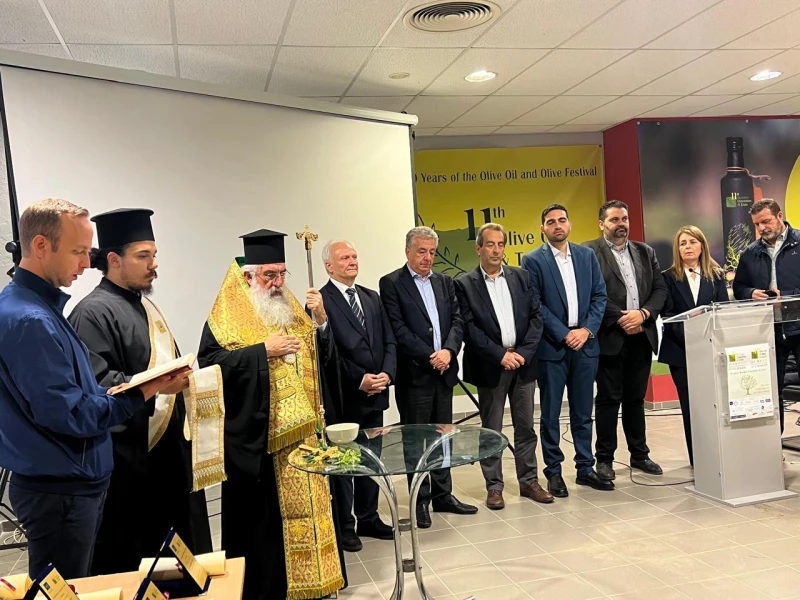
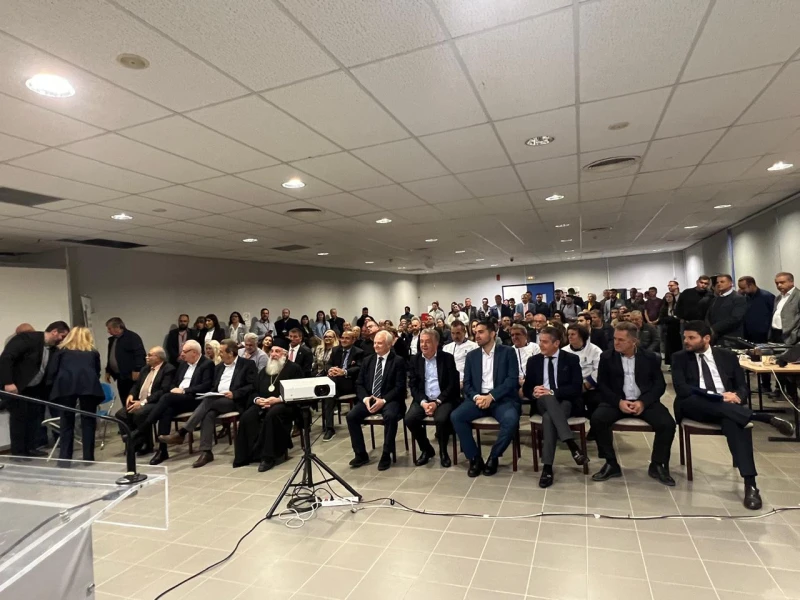
The Deputy Minister of Rural Development and Food, Yannis Andrianos, represented
Prime Minister, Kyriakos Mitsotakis at the opening of the 11th Olive Oil and Olive Festival,
which took place in Gournes Heraklion.
In his address, Mr. Andrianos congratulated the organizers, the producers, the
oil producers, the cooperatives, the businesses of standardisation and marketing, as well as
all the people who contribute to the promotion of Greek olive oil and Greek extra virgin olive oil.
The Deputy Minister stressed that the Crete, with its deep historical and productive relationship with
the olive, is an ideal place for such an event, as olive oil is inextricably linked
with delivery, the Mediterranean diet, the local identity, the economy and the international image of the country.
Referring to the challenges of the olive sector, Mr. Andrianos focused in particular on the
impacts of climate change, plant protection and dust control, the cost of production, price fluctuations and international competition.
He noted that the response must be coordinated, with an emphasis on quality, certification, the traceability, the branding and the extroversion of olive products.
Specifically for the decapitation in Crete, he said that a sum of
9.970,000, with sufficient materials for at least two sprays. At the same time,
he noted that the supply of medicines is now for a period of 2+1 years, in order to
ensure long-term sufficiency.
Mr. Andrianos also referred to the Oil Register and the postponement of the obligation of the Harvest Declaration to 1 October 2026, noting
the cooperation with ADEA and the interoperability of systems following the
inclusion of OPEKEPE.
Special reference was made to the registration of the olive oil “Crete” as a PGI (Protected
Geographical Indication), describing it as a significant national success that reinforces its
present value, protects producers and creates new export opportunities
.
He concluded by stressing that the State will continue to support the agricultural sector, with the aim of a resilient, modern and extroverted olive-growing model, while he also referred to the new Common Agricultural Policy (CAP) with emphasis on modernisation, quality and market organisation.


