

Greece is getting rules for the safe and pedagogical use of Artificial Intelligence in schools, the Sofia Zacharaki in Brussels.
At the Council of Ministers of Education of the European Union, taking place in Brussels, was attended by Minister of Education, Religious Affairs and Sport, Sofia Zacharaki, where she announced that Greece is for the first time acquiring a integrated regulatory framework for the safe, transparent and pedagogically responsible use of Artificial Intelligence (AI) systems in secondary education.
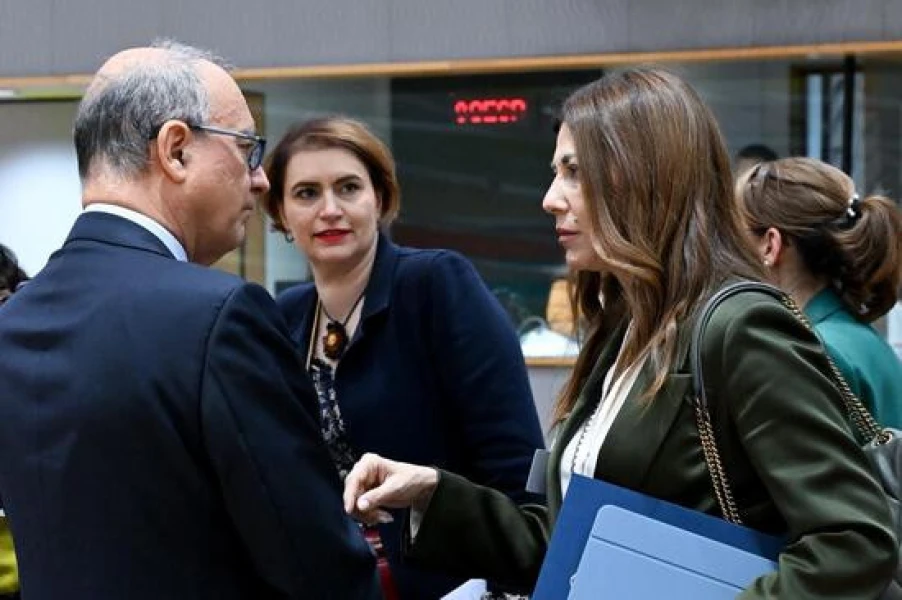
During the Council’s proceedings, Sofia Zacharaki informed her European counterparts in detail about the new Ministerial Decision that she signed together with the Minister of Digital Governance, Dimitris Papastergiou, for the use of Artificial Intelligence in schools, in the context of the Government’s strategy for a modern, safe and inclusive digital transformation of education.
The Minister pointed out that with this new initiative, Greece becomes one of the first countries in the European Union to adopt a comprehensive and binding regulatory framework for the safe and responsible use of AI in secondary education.
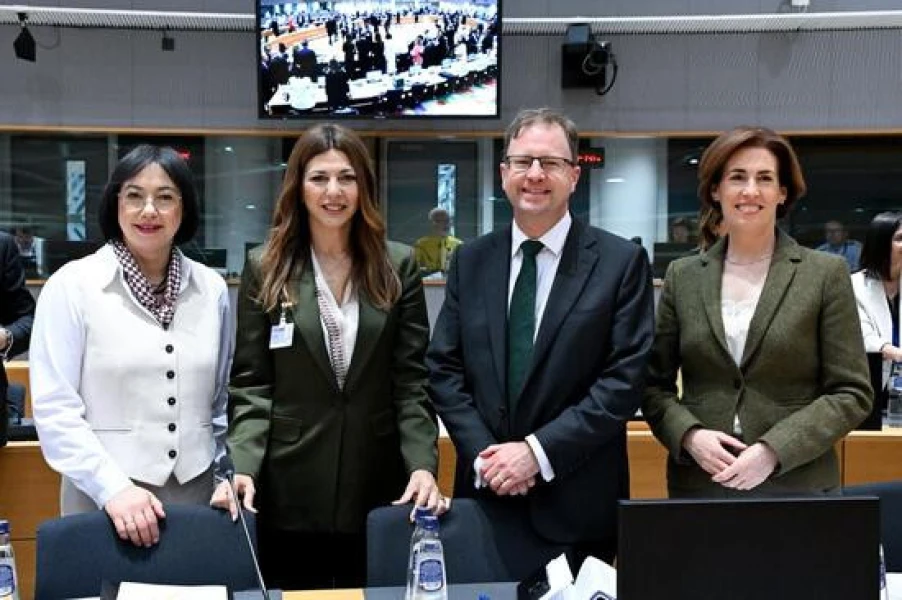
The aim of the political leadership of the Ministry of Education and the Government is that the use of AI in the educational process should be done with absolute respect for the personal data of students, with clear human supervision, strict transparency rules and with the aim of enhancing – and not substituting – the pedagogical role of the teacher.
The minister, Sofia Zacharaki, said: “I informed my colleagues about the Ministerial Decision we are issuing jointly with the Ministry of Digital Governance, on the correct and safe use of AI in schools. Greece is among the few European countries that already have such a comprehensive framework, fully harmonized with the European regulation on personal data protection and the European framework on AI, aiming to protect children and the educational process. We want the use of AI in education, but with rules, responsibility and always under the supervision of teachers.”
The key session at the Council of Ministers was a discussion on “Basic Skills and the European Education Area: Building bridges for the future”, which presented the preparation of education systems and how students and teachers are preparing for change to make them more resilient in the new era defined by successive challenges and crises. In Greece, as Sofia Zacharaki stressed, the core competences and skills of students have been placed at the core of the transformation of education.
New skills such as digital and economic literacy, active citizenship, critical thinking and attitude against misinformation are being integrated in an organised way in public schools, protection against deepfakes and misleading content, as well as continuous upgrading and updating of skills (reskilling and upskilling).
In the same context, the minister referred to the National Dialogue on the New Lyceum and the National Baccalaureate, aiming for a school that places greater emphasis on basic skills, critical thinking, creativity, equal access to knowledge and the student’s overall learning path. As she stressed, the goal is a more modern, reliable and people-centred assessment system, which will strengthen the pedagogical role of schools and better prepare young people for higher education, work and as citizens of a democratic society.
Sofia Zacharaki said: “My counterparts and I discussed how to prepare children for the changes and to adapt quickly and adequately to modern conditions. How they will become more resilient and more flexible. But all this must be done without losing our fundamental values: democracy, inclusion, solidarity, respect for people and the human-centred dimension of education. These are the principles that must guide any major change for the school of the future.”
Sofia Zacharaki recalled that the Greek Government has a comprehensive strategy for the protection of minors online, with a series of measures at European and national level. From 1/1/2027, access to social media for children under 15 years of age will not be allowed and platforms will be obliged to adopt reliable age verification mechanisms and prohibit access to minors. At the same time, the minister said, Greece introduced from May 2025 the Kids Wallet, the digital parental control tool that allows parents to regulate the apps and websites their children access and the time they spend on them, while providing a reliable method of verifying the age of minors online.
In the context of the work, the Council Conclusions on the role of teachers in the age of Artificial Intelligence were adopted, among others, sending a strong message that AI can only support learning and innovation when it is used with human supervision, pedagogical responsibility, personal data protection and respect for the role of the teacher. At the same time, the Education Ministers reached a partial general approach on the new Regulation establishing the Erasmus+ programme for the period 2028-2034, a crucial step for the future of the flagship European programme for education, training, youth and sport. Greece supported the agreement, with an emphasis on inclusion, equal opportunities, skills, mobility and youth participation.
Sofia Zacharaki also participated in the working lunch of the Ministers of Education of the Member States, chaired by the Minister of Education, Dr Athinas Michaelidou, on the subject of building resilient education systems in times of crisis. The meeting was also attended by the Minister of Education and Science of Ukraine, Oksen Lisovyi, highlighting the importance of education as a pillar of social cohesion and stability.
In the margins of the Council, Sofia Zacharaki met with the Irish Minister for Post-Secondary and Higher Education, Research, Innovation and Science, James Lawless, as well as with the Irish Minister for Education and Youth, Hildegarde Naughton, and the Lithuanian Minister for Education, Science and Sport Raminta Popovienė, on the coordination of priorities for the next trilateral format of the Tripartite Presidency of the Council of the European Union.EU Presidency, which will involve Greece, Ireland and Lithuania.


