

Greece is “hitting red” demographically and the debate on halting population decline gained an international platform in Ithaca, where the three-day conference Greece at Demographic Crossroads took place from 6 to 8 May.
The conference, hosted in Ithaca, was held under the auspices of the Cyprus Republic, President of the Council of European Union, was organised by the Hellenic Network of Small Islands, the Municipality of Ithaca, the Hellenic Intermunicipal Network of Healthy Cities, the World Hippocratic Institute of Physicians, the Hellenic Society of Reproductive Medicine and the General Secretariat of the Aegean and Island Policy.
The conference was attended by ministers, MEPs, ambassadors, academics and representatives of local government. The Embassy of the Republic of Cyprus organised a special thematic session in which ambassadors of EU member states
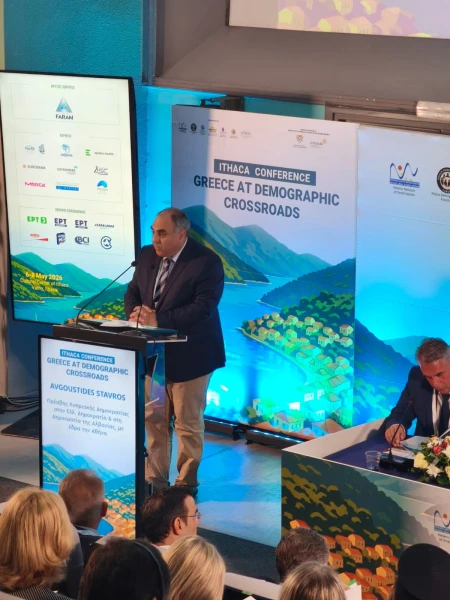
The speeches and discussions highlighted that demography is much more than numbers: it is a matter of perspective, social cohesion and sustainability. “Europe can no longer see demography as a simple social issue, it is a matter of perspective,” said the Ambassador of the Republic of Cyprus in AthensStavros Avgoustidis.
Professor Vyron Kotzamanis, director of the Institute for Demographic Research and Studies, closed the third day with the pointed observation that we face “demographic collapse” if we do not move swiftly from discussion to action. Presenting data from the Institute for Demographic Research and Studies, he pointed out that by 2060 there will be 60,000 more deaths than births, meaning that Greece’s population will decrease by 1.7 million people, but clarified that this scenario does not account for the increase in births through the integration of immigrants. But what is more worrying, he said, is that the reproductive population of our country will decrease by 35%, so the balance of deaths and births cannot be “closed” because there will not be the reproductive population to procreate. His crucial conclusion was that each region has its own dynamics and therefore requires a separate approach: the causes in urban areas, the periphery and small islands differ radically.
The mayor of Ithaca, Dionysis Stanitsas, declared the opening of the proceedings and described with realism the reality of the island and spoke about the demographic crisis, in our country and abroad, which we must take advantage of to demand a change in the legislative framework and a change of mentality, especially for small island regions.
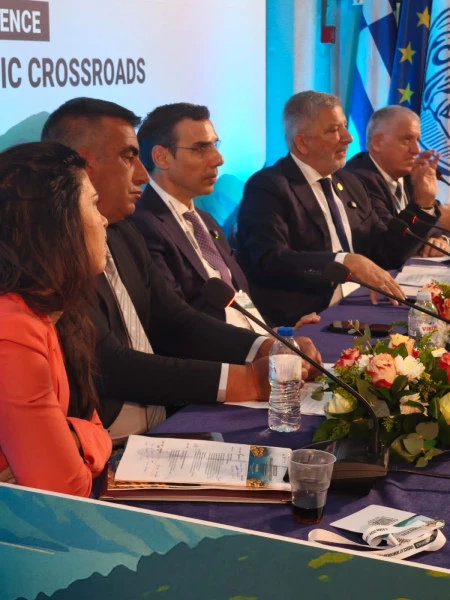
The president of the Greek Network of Small Islands,Lefteris Kechagioglou, underlined the criticality of the issue for the islands: “Demography is now a matter of national and European survival. Small islands are at the forefront of the challenges, facing population decline, limited access to services and the need for substantial support policies.”
The conference emphasized the need for decentralization of services and infrastructure: the president of the E’ Intermunicipal Network of Healthy Cities and the Athens Medical Association Georgios Patoulis stressed that public health services and infrastructure must bring service closer to the citizen, strengthening local communities and reducing pressure on cities. At the same time, he pointed out that conditions should be created for the return of thousands of scientists who left our country during the economic crisis and are raising families in other countries.
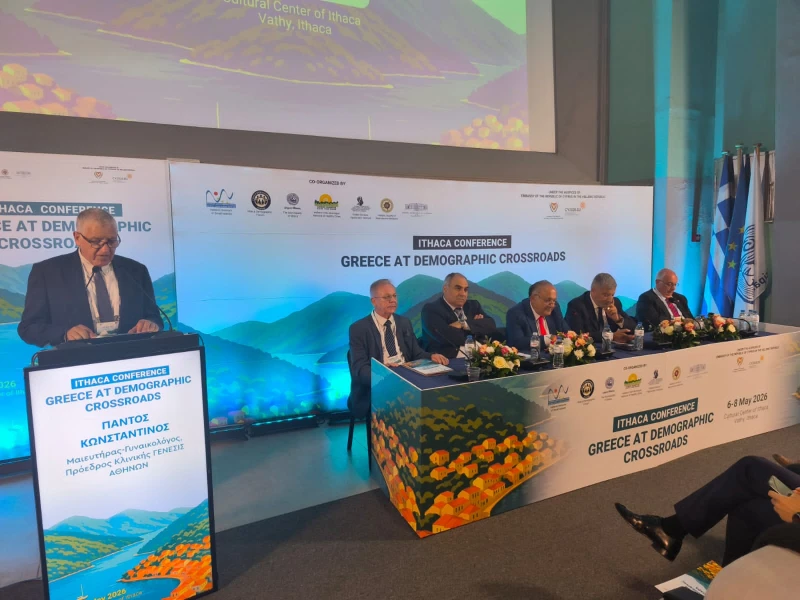
The general secretary of the Hellenic Society of Reproductive Medicine, Konstantinos Pantos, from the scientific approach side, highlighted the need for information on fertility and access to reproductive medicine services, stressing that “the group of people over 40 is the fastest growing category seeking fertility services. Direct and equitable information is needed on the age-related impact on fertility, preservation options and realistic chances, perhaps integrated into primary care.
The Secretary General of the World Hippocratic Institute of Physicians Antonis Polidorou, at the conclusion of the conference, said “The conference “Greece at a critical demographic turning point” has come to an end. For the first time, all political, scientific and cultural views were expressed under the auspices of the Embassy of the Republic of Cyprus in Greece.
One of the important announcements was the creation of the Ithaca Demographic Forum, a body based in Ithaca that aims to highlight local and regional demographic issues, to propose feasible solutions and to transfer the experience to other European countries with similar problems, in order to draw conclusions and sustainable practices.
Practical conclusions highlighted include: targeted financial incentives for returning residents, creation of housing infrastructure for professionals such as health workers, teachers, strengthening primary care with pediatricians and general practitioners, fertility awareness programs, access to reproductive medicine and utilization of cultural assets for sustainable local development. The example of Yanitsa, where targeted incentives led to a reversal of the negative birth-death balance, was cited by its Mayor Stathis Fountoukidis as a practice that can be adapted to other regions.
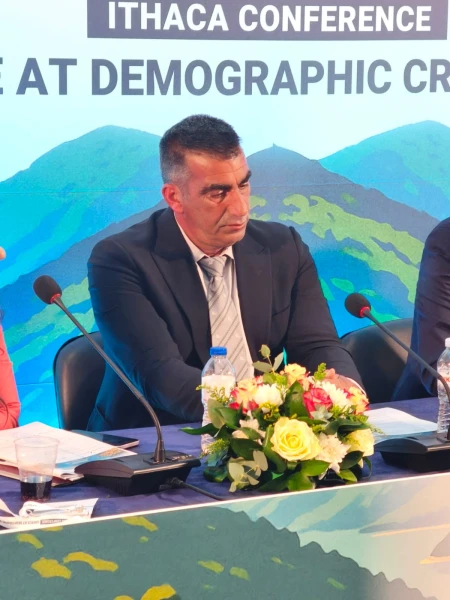
The presence and interest of founder and President of the Kind Things Public Benefit Foundation Erietta Kourkoulou-Latsis was expressed by stating, “Underfertility is one of the most critical challenges for the future of Greece, with profound social and economic implications that affect the cohesion and sustainability of the country. In this context, support and outreach initiatives can act as an essential ally, actively supporting young couples and strengthening the conditions for having children. Without replacing the role of the State, they come to fill existing gaps and offer real solutions where there is a need. Strengthening parenthood is not only a social priority, but a collective responsibility and an essential investment in the future of the country.”
Government and political actors from our country also spoke at the Conference, contributing to the political dimension of the dialogue launched through this initiative.
Labour Minister of Labour Niki Kerameos, during her remarks, stressed that there is a long-term policy on demography for professional rehabilitation and measures are being taken for the return of young people from abroad.
The State Minister of Health Marios Themistocleous pointed out that the more prosperous countries have similar ratios, around 1.3, confirming the rule that where there is more growth, the fewer births. He stressed “The government has created a separate ministry for the family. Resources have been secured to the tune of 20 billion euros over a ten-year horizon, or 2 billion euros a year.”
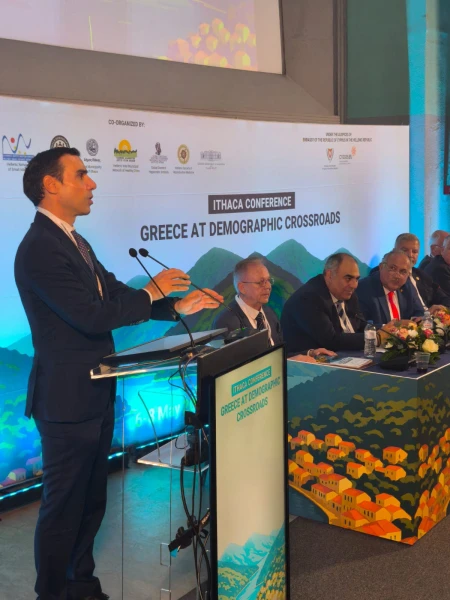
The State Minister of National Economy and Finance, responsible for Fiscal Policy, Thanos Petralias, analysing the Impact of Demography on Economic Competitiveness, highlighted the close link between demographic developments and macroeconomic stability, productivity and the sustainability of the country’s growth prospects.
For her part, State Minister of Interior Vivi Charalabogianni spoke on “Demographic Challenge and Public Administration: Focus on Human Resources”, highlighting the importance of a modern and resilient public sector, capable of responding to changing social and demographic needs, focusing on human resources and the efficiency of public services.
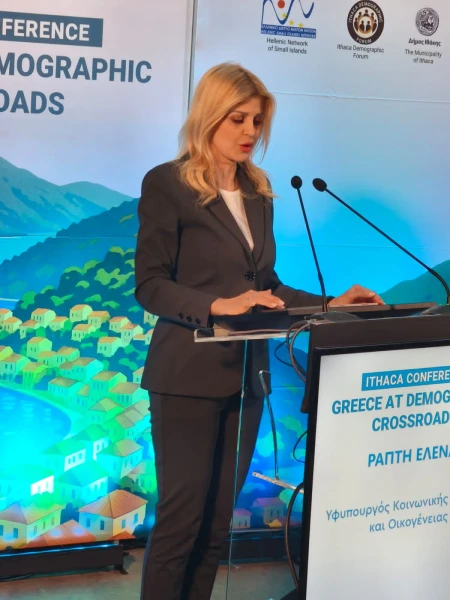
The State Minister for Social Cohesion and Family Elena Rapti highlighted the national action plan on demography, which includes interventions on housing and the importance of reproductive health, noting “Information and prevention play a key role. Motherhood is often postponed until later. The AMH test takes on particular importance, it gives valuable information about fertility. Knowledge does not limit a woman, but empowers her.”
PASOK MP and former minister Pavlos Geroulanos noted that “in addition to strengthening the resources for the family, it is important to ease the difficulties and demands of parents. We need the whole society to care about raising a child and all those things that have no cost, but make the family and parents not feel alone.”
MEPs Nikolaos Farantouris and Sakis Arnaoutoglou delivered speeches on “European Economic Governance under Demographic Pressure” and “Regions, Youth and Demographics: Bridging Inequalities in Europe” as well as the remarks of Panagis Kappatos, Member of Parliament for Kefalonia of the New Democracy, gave the message that there are no political borders in national issues.
The testimony of Mr.Dimitris Arkouzis, from Ithaca, describing his ordeal in trying with his wife to have a child.
The stakes and commitment of this Congress were undoubtedly the important event. All those who participated highlighted critical aspects of the demographic challenge and its implications for public policy and the functioning of the state.
.


