

In Chania, the Minister of Migration and Asylum, Thanos Plevris, the Deputy Minister, Sevi Voloudaki, and the Director-General Migration and Home Affairs of the European Commission, Beate Gminder.
They conducted an on-site inspection of the temporary accommodation facility in Agyia and participated in a meeting with representatives of local government and the authorities responsible for managing the increased migration flows to Crete.
During the visit, progress on the work in Agyia was presented, while immediate measures being implemented for the effective management of arrivals, the rapid registration and identification of irregular migrants, as well as the need to strengthen cooperation between Greece, local authorities, and European institutions.
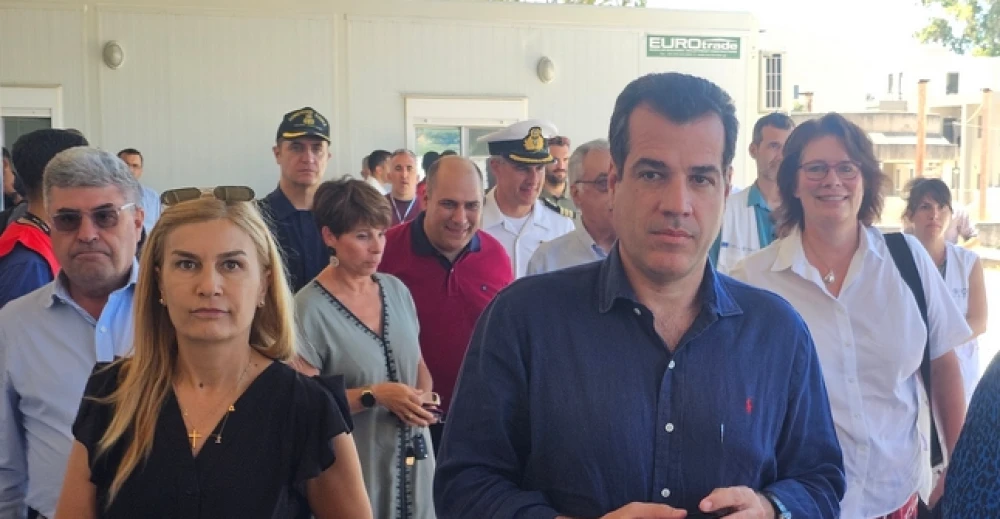
The Minister of Migration and Asylum, Thanos Plevris, stated: “The management of the situation in Chania is functioning in an exemplary manner. We have secured facilities throughout mainland Greece, and therefore Agia serves as an initial screening center to distinguish between those who do and do not have refugee status. Our goal is to limit the stay in Chania to the time strictly necessary to complete the initial procedures, as fully guaranteed accommodation is available throughout the rest of the country. At the same time, starting next month, we expect to have our own vessel, so that transfers can take place without placing a burden on the island, especially during the tourist season.
The government’s goal is not only to manage migration effectively but also to reduce migration flows. Under no circumstances do we want a migration route between Libya and Crete to become established. For this reason, we are working systematically, in cooperation with all relevant ministries and the Libyan authorities, to strengthen deterrence measures and limit irregular migration flows.”
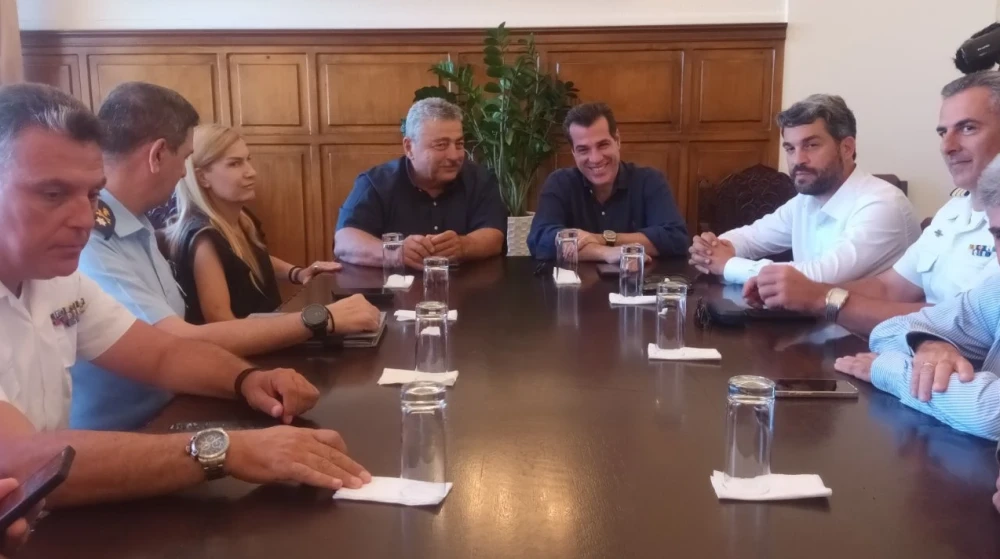
For her part, Deputy Minister of Migration and Asylum, Sevi Voloudaki, stated: “Crete is on the front lines of the increased migration pressure our country has been facing from the south in recent times. Chania, through the cooperation of local government, state agencies, law enforcement, and European institutions, demonstrate every day that they can respond responsibly and effectively to this complex challenge.
In this context, Agyia serves as a first reception and screening center, where the necessary registration and identification procedures are carried out, with the aim of transferring new arrivals as quickly as possible to the appropriate facilities on the mainland and ensuring that their stay in Crete is temporary and fully controlled. At the same time, we are implementing a comprehensive policy for the effective management of migration flows and the strengthening of deterrence measures, so that the Libya-Crete migration route does not become established. Our goal is to protect the local community and safeguard our region’s development, while ensuring full compliance with the country’s international and European obligations.”
In turn, the Director-General of the European Commission’s Directorate-General for Migration and Home Affairs (DG HOME), Beate Gminder, pointed out that “the European Union, within the framework of the new Pact on Asylum and Migration, has recognized that Greece is facing intense migratory pressure,” while making special mention of Crete, emphasizing that “it is doing exemplary work by hosting people who arrive by crossing the sea.”

At the same time, he noted that “the European Union is working closely with Egypt and Libya to help people return to their countries of origin and remain there.”
He also referred to the ongoing cooperation with the Greek government to find effective solutions for managing migration flows, both for those in need of international protection and for those who must be returned, as they are not entitled to remain in the European Union.
In closing, he emphasized that “European solidarity with Greece, and particularly with Crete, is a given,” while expressing her desire to gain a full picture of the situation on the ground and describing “the work being done in Crete as particularly impressive.”


