

The European car market in 2026 is in a phase of dynamic but uneven transition, with hybrid cars registering the biggest rise and are now the dominant choice of consumers, with electric vehicles steadily increasing their share under the influence of incentives and infrastructure charging, and petrol and diesel engines falling back significantly, as shown by first-quarter registration data and March’s strong performance in key markets such as Germany, France, Italy, Spain and the United Kingdom, shaping a luxury landscape where engine choice is primarily determined by cost of use, practicality and actual mobility needs.
This picture emerges not only from the overall volume of registrations, but mainly from the change in market composition, where individual categories of engines more accurately reflect consumer behaviour and real trends that are emerging at European level. The variations among the key technologies, but also the divergences between the major markets, highlight that the transition is not proceeding at a uniform pace, leading to a more complex and layered reality that deserves to be analysed in depth.
The real picture behind the “transition”
The picture of the European car market in 2026 is increasingly moving away from the simplistic narrative of the immediate dominance of electrification. The first-quarter data shows a different reality: the transition is progressing, but in terms of markets, not slogans.
Consumers are not choosing technology based on political guidelines, but on cost, convenience and usability. And that changes the balance.
Growth with caveats
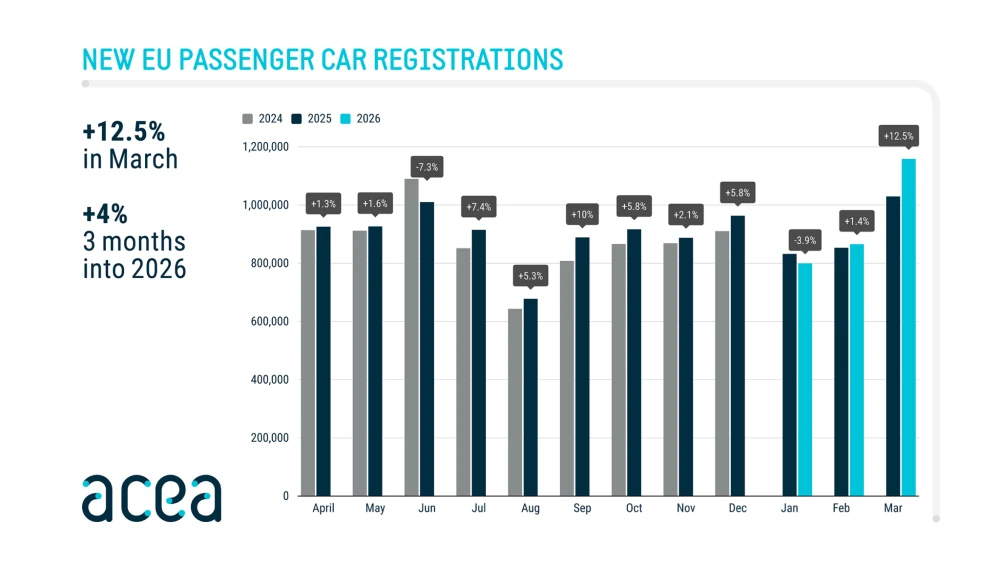
The market is showing growth, with March providing a strong first-quarter boost. However, the overall picture remains more subdued, confirming that demand is not inexhaustible and depends on economic conditions and expectations.
The European market appears to be stabilising, but has not returned to a strong growth environment.
Consumer choice is cancelling out stereotypes
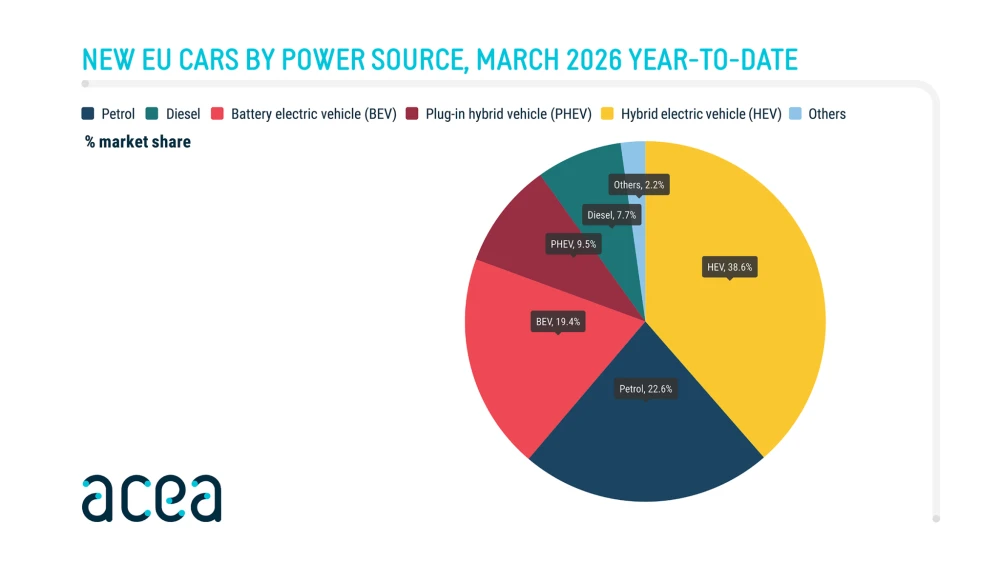
The most interesting element is the composition of the market. This is where the real trend is reflected: European drivers are turning en masse to hybrids.
Not because they are an “intermediate solution”, but because they better answer today’s needs. They do not require a change in behaviour, do not depend on infrastructure and offer immediate benefits in terms of consumption.
Electrics: Growth with limits
Electric cars are growing in share, but their trajectory remains uneven. In countries with strong incentives and well-developed infrastructures they are moving strongly. In others, penetration remains limited.
Purchase costs and practicality continue to be key barriers, limiting the speed of transition.
Diesel and gasoline in retreat
Traditional engines are steadily losing ground. Diesel, in particular, is in a phase-out from passenger use, while gasoline is retreating more slowly but steadily.
This is not a collapse, but a gradual replacement.
Major markets show the contradictions
Europe is not moving in a unified way:
* In Germany and the UK, electrification is strengthening faster
* In Italy and Spain, hybrids clearly dominate
* In France, political support for EVs coexists with a strong hybrid presence
This picture reveals that the transition is not a single policy choice, but the result of different economic and social conditions.
A market without ideological certainties
In 2026, a luxury technology landscape is taking shape where no one solution completely dominates. Hybrids are the strongest option, electrics continue to gain ground, but without imposing themselves, while thermal engines are retreating without disappearing.
The European market is showing something simple but crucial: the transition to self-driving cars will not be driven by proclamations, but by consumer choice. And right now, those choices are clearly pointing toward hybrids.
.


