

The Summit of the Initiative and the Three Seas Economic Forum concluded today, with the participation of Minister of Environment and Energy, Mr. Stavros Papastavrou, in the roundtable discussion on “Advancing Energy Corridors in the Three Seas Region”.
The panel was hosted by the US Secretary of Energy, Mr. Chris Wright, with the participation of his counterparts from Croatia, Poland, Lithuania, Bulgaria, Moldova and Bulgaria, Latvia and other SEE countries, as well as European Commission officials, including the Director General for Energy, Ditte Juul Jørgensen.
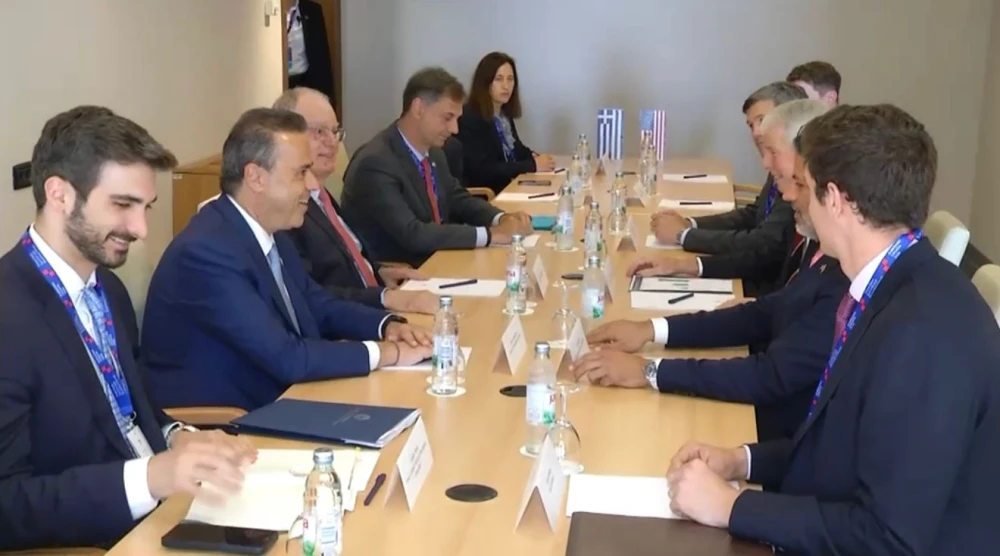
In meeting, the Minister of Environment and Energy highlighted Greece’s leading role in the Vertical Corridor, and the energy agreements reached in the P-TEC, which are shaping the energy landscape in our region.
In his presentation, he touched on four key points:
First, the Minister briefed his counterparts on the agreement reached a few weeks ago between the Transmission System Operators of Greece, Bulgaria, Romania, Bulgaria, Moldova and Ukraine, in cooperation with the European Commission, which marks a substantial leap forward in maturity for the Vertical Corridor. He said the agreement ensures regulatory clarity, competitive and predictable tariffs, and the possibility of long-term capacity commitments, enhancing the commercial viability of the corridor. The result is a transition from fragmented flows to a reliable and financeable energy network, enhancing security of supply in the region.
Second, welcome the tangible and decisive steps taken yesterday, firstly, with the important 20-year agreement signed between AKTOR LNG USA and the Albanian AlbGaz, and on the other hand, the agreement on the Bosnian-Croatian gas pipeline Southern Interconnection, describing them as decisive steps leading to further independence from Russian gas.
Thirdly, he highlighted the need for the European Commission to guard the Turkstream bypass and Turkey’s compliance with the ban, and called on the Commission to proceed with generous funding for energy infrastructure projects and adaptation of the regulatory framework, stressing that “infrastructure follows the regulatory framework and investment follows certainty”.
Finally, he announced that there will be a meeting with Serbia and North Macedonia in the coming period to speed up the interconnection projects of the three countries in the framework of the founded Vertical Axis.
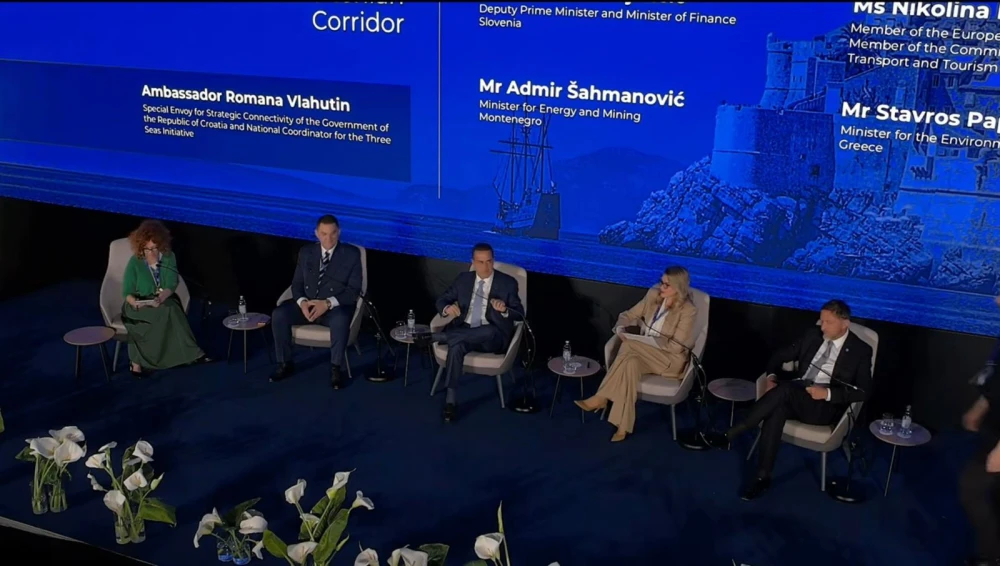
Recall that on the first day of the Summit, Tuesday 28 April, Mr. Papastavrou participated in the Economic Forum of the Summit as a speaker in the panel “The Adriatic-Ionian Corridor” with his counterparts from Central and Eastern Europe. At noon on Tuesday, Mr. Papastavrou, together with the US Under Secretary of State for Political Affairs, Ms. Allison Hooker, as well as the President and CEO of the Japan External Trade Organization, Mr. Isiguro Norihiko, participated in a closed discussion at an Economic Forum working lunch on “Turning to Asia”.
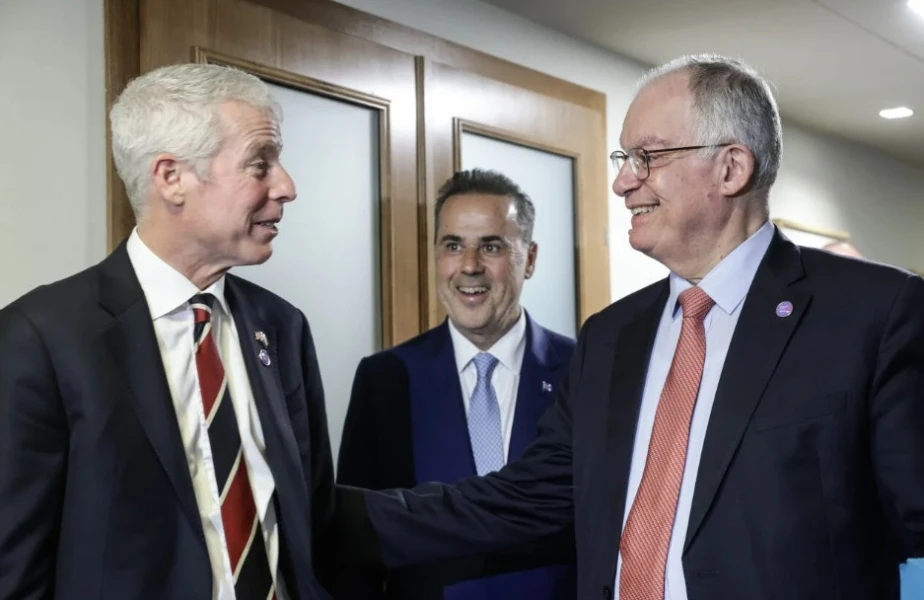
On Tuesday afternoon, Mr. Papastavrou held a bilateral meeting with Ante Šušnjar, the Croatian Minister of Economic Relations, responsible for energy. He also met with President of the Hellenic Republic, Mr. Tasoulas, together with the US Secretary of Energy, Mr. Chris Wright, and the Deputy Secretary of State, Mr. Harris Theocharis.
After leaving Croatia, Mr Papastavrou assessed the participation of the national delegation, summing up. The primary role played by our country in the energy security and independence of the region of South-Eastern Europe and the Western Balkans was clearly highlighted. The energy agreements signed last November at the European Energy Summit in P-TEC are the flagship for the energy security of South-East Europe.”


