

The leaders of Greece, Cyprus and Jordan reaffirmed their alliance, focusing on regional stability and the development of common infrastructure.
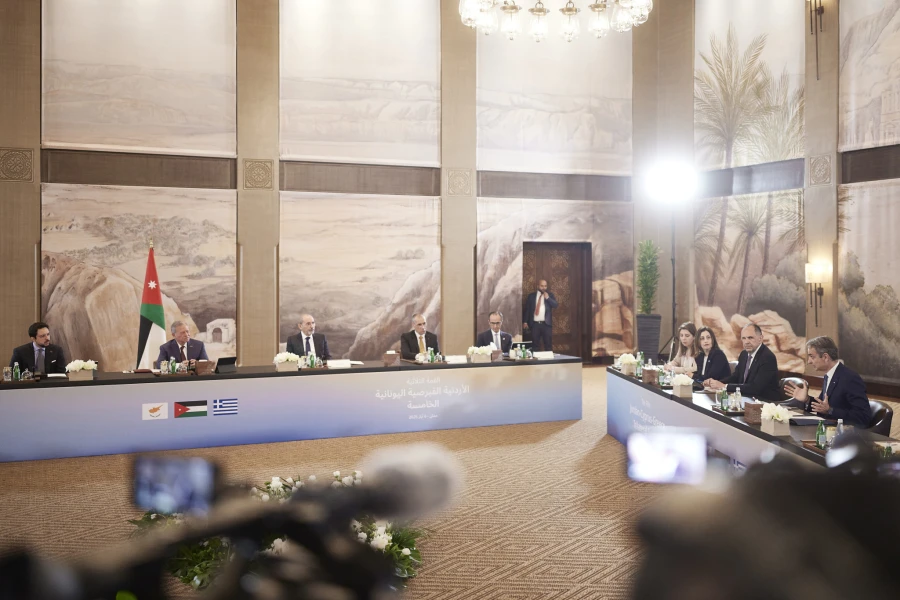
At a crucial diplomatic meeting in Amman, King Abdullah II, Kyriakos Mitsotakis and Nikos Christodoulides issued a Joint Communiqué, underlining the key role of their cooperation.
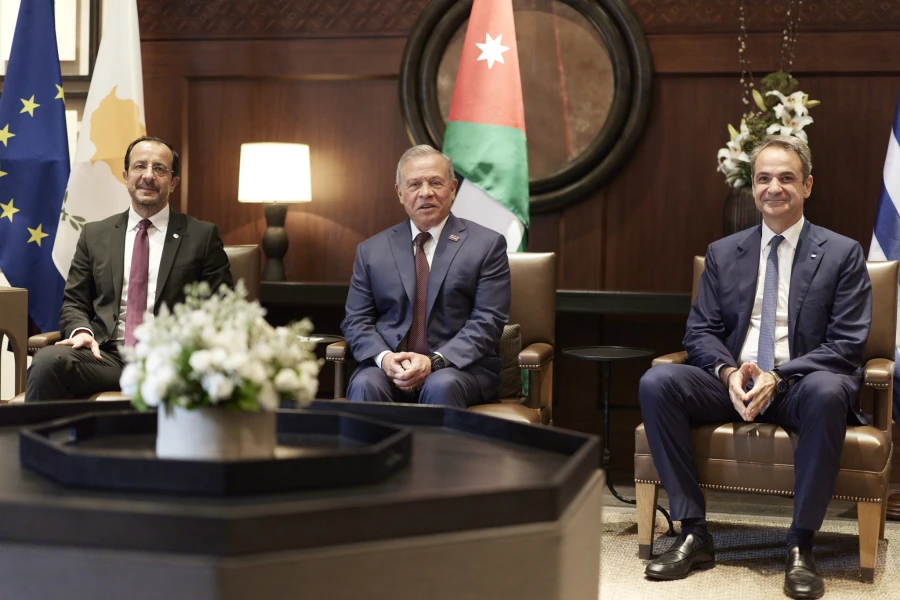
The three sides welcomed the progress made, while highlighting the need to deepen relations in areas such as energy, trade and investment. The central objective remains the transformation of the Eastern Mediterranean into a strong economic hub linking the European Union with the Arab world, enhancing the resilience of supply chains and the security of trade routes.
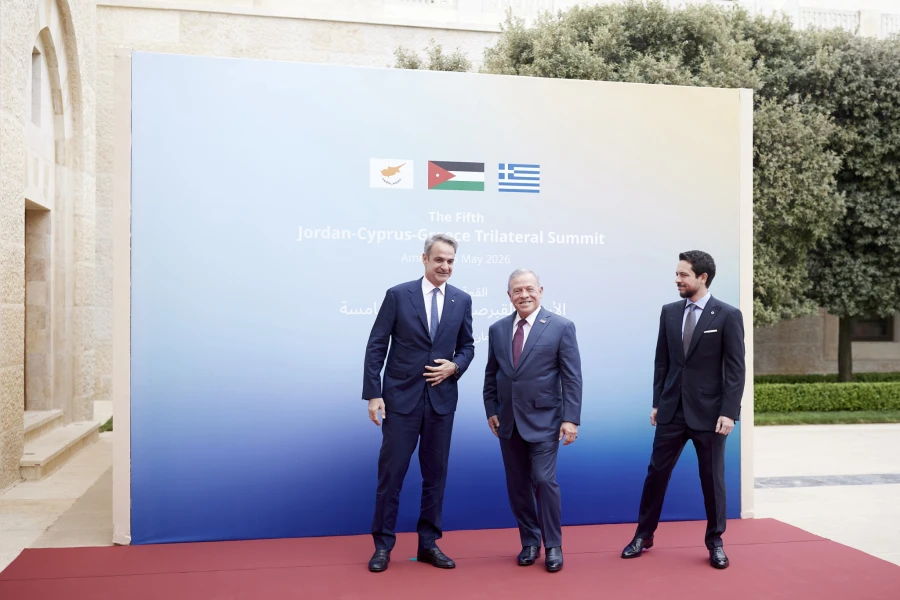
Special emphasis was placed on the three states’ adherence to the principles of international law and the United Nations Charter. The leaders stressed the importance of respecting territorial integrity and the sovereignty of nations, rejecting all forms of violence or acquisition of territory through armed conflict.
Their shared commitment to peaceful resolution of disputes is the basis on which they seek to build an environment of security in an era of intense upheaval.
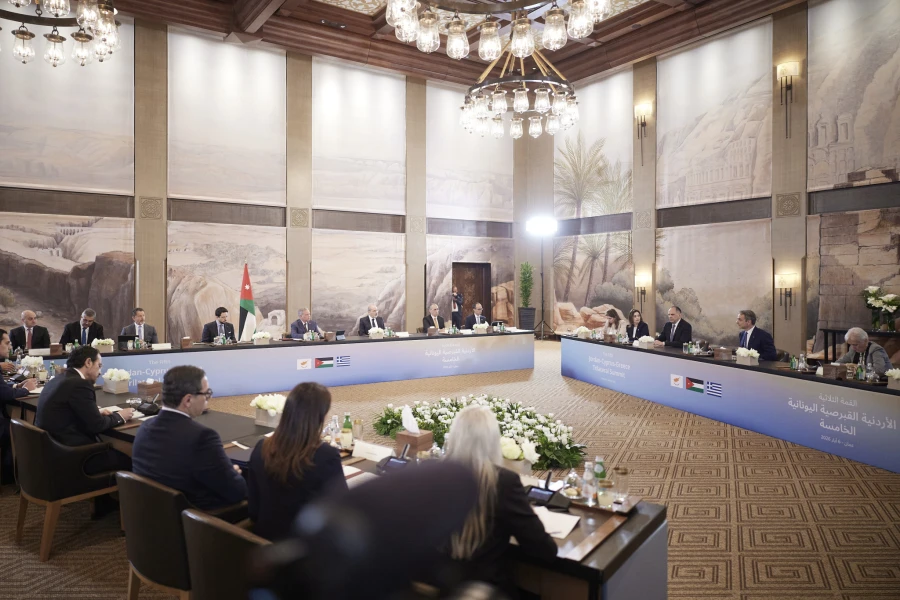
At the same time, the Summit did not fail to express its deep concern about the dangerous direction the crisis in the Middle East is taking. The leaders warned of the dramatic human and economic consequences of the escalation, calling on the international community to intensify efforts to immediately de-escalate tensions.
Stability in the region is seen as a prerequisite for the prosperity of peoples, with the trilateral alliance sending a strong message of unity and strategic cooperation against regional threats.
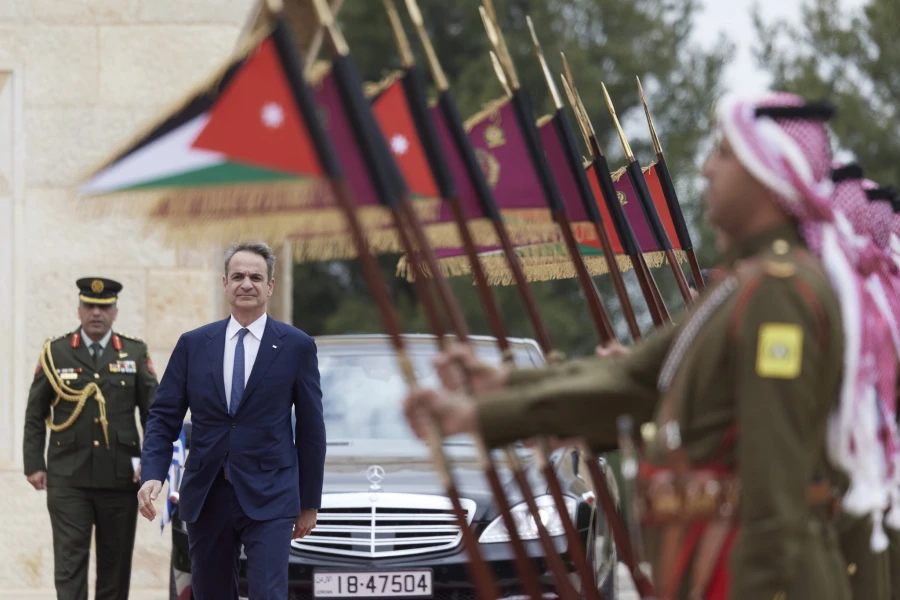
The Joint Communiqué
After the proceedings, the three leaders issued a Joint Communiqué, which reflects the common positions and future actions of the trilateral cooperation. The highlights are summarized as follows:
Direction of Cooperation: It was agreed to strengthen ties in the areas of trade, energy, investment and culture.
Resilience and Food Security: Emphasis was placed on the resilience of supply chains, the security of trade routes, as well as innovative solutions for food and water security.
Climate Crisis: The opening of the Cyprus Regional Aerial Fire Fighting Station (CRAFS) in Paphos was welcomed as a key step for Civil Protection in the Eastern Mediterranean.
Escalation: Deep concern was expressed about the escalation in the Middle East. The need to maintain the ceasefire between the US and Iran and free navigation in the Strait of Hormuz was stressed.
Palestinian and Gaza: The three leaders reiterated their support for the two-state solution, condemning illegal Israeli settlements. They called for the full implementation of the peace plan and UN resolutions to end the humanitarian crisis in Gaza, while supporting the critical role of UNRWA.
Lebanon: The need to respect the ceasefire, support the sovereignty of the Lebanese government and the country’s army, and protect the UNIFIL peacekeeping force was stressed.
Syria: The reconstruction and stability of Syria was supported, with respect for its territorial integrity, and the need for continued support for Syrian refugees and their host countries, such as Jordan, was stressed.
Reiterated strong support for a just, comprehensive and viable solution to the Cyprus problem, based on a bizonal, bicommunal federation, in accordance with international law and UN Security Council resolutions. The leaders condemned any unilateral action that undermines peace efforts.
Both Greece and Jordan expressed their absolute support for the upcoming Cyprus Presidency of the Council of the EU (from 1 January 2026), considering that it will contribute decisively to linking Europe with its Southern Neighbourhood and promoting stability in the region.
The Summit concluded with the commitment of the three states to maintain the dynamic character of their alliance, renewing their appointment for the 6th Trilateral Summit, which will be hosted by Greece in 2027.


