

The operation of the 37 Investigative Units for Combating Crimes Arson marks a significant change in the way fires are investigated in the country.
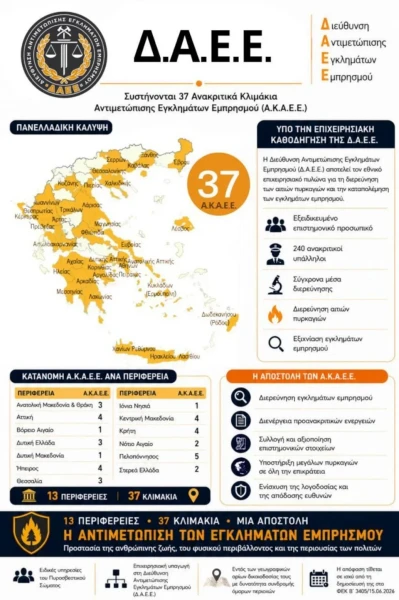
The new units form a unified operational network covering the entire country and reporting to the Directorate for Combating Arson Crimes (DAEE). The unit is staffed by 30 specialized officers from the Fire Department, while the AKAEE has a total of 240 investigative officers with experience in fire investigation.
According to officials from the Fire Department, the new structure enhances the ability to investigate the causes of fires, speeds up the resolution of arson cases, and enables an immediate operational response in every region of the country.
The establishment of the AKAEE was recently published in Government Gazette B 3405/June 15,2026 and, as relevant sources point out, is part of a broader strategy for preventing and combating fires.
How are the new Units distributed?
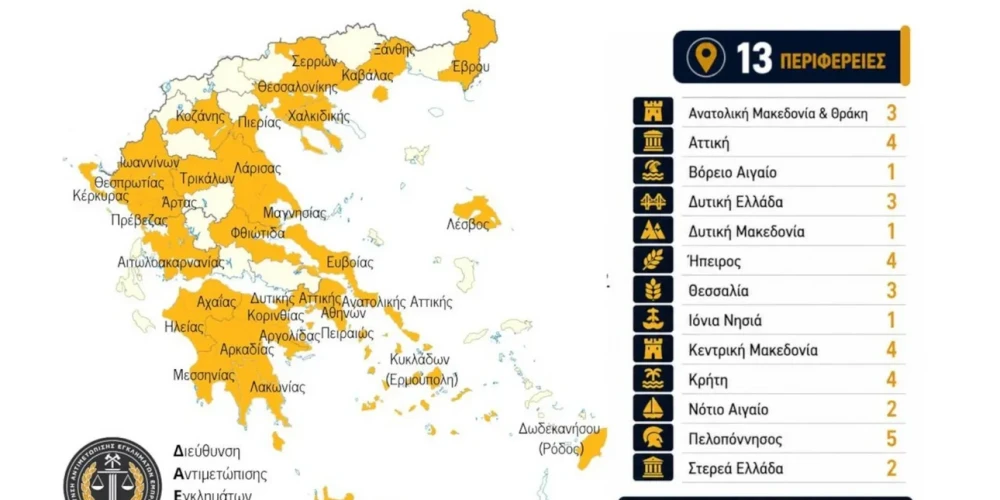
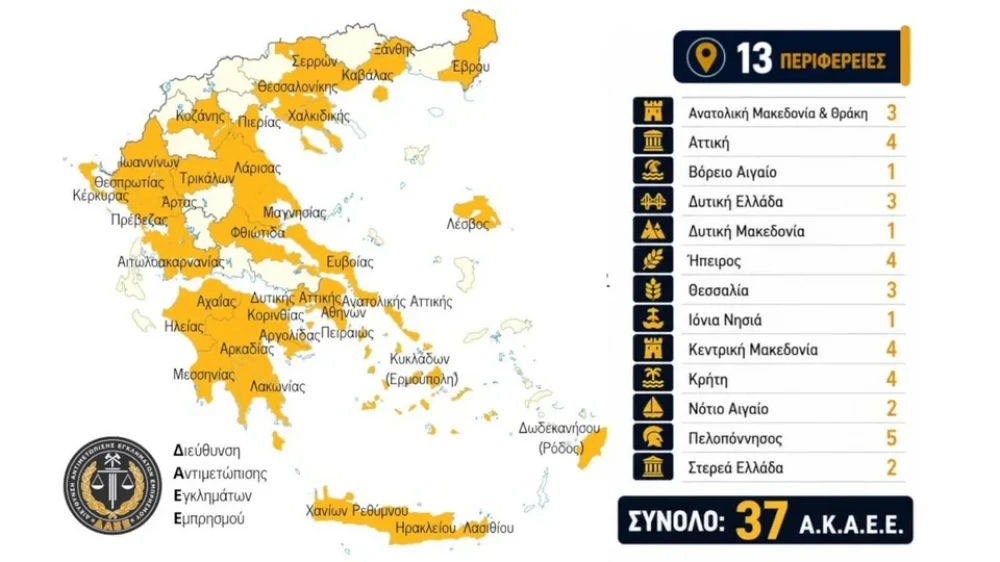
The geographic distribution of the AKAEE units was planned based on operational needs and the frequency of fires.
The Peloponnese Region has five units, located in Messinia, Argolis, Corinthia, Arcadia, and Laconia.
Four units are operational in the Regions of Attica, Central Macedonia, Epirus, and Crete.
Three units are being established in the regions of Eastern Macedonia and Thrace, Western Greece, and Thessaly.
Two units are operating in the regions of Central Greece and South Aegean.
The Regions of Northern Aegean, Ionian Islands, and Western Macedonia each have one unit.
According to sources within the Fire Department, these units can also assist in neighboring areas, and in the event of large fires, they have the ability to operate outside their home base upon receiving the appropriate order.
Investigating fires is an exclusive task
AKAEE staff will focus exclusively on investigating the causes of fires, collecting evidence, and solving arson cases.
Until now, much of the investigative work was carried out alongside other operational duties. Under the new structure, hundreds of investigative officers focus exclusively on preliminary investigative procedures, enhancing the effectiveness and speed of investigations.
The teams’ mission includes conducting preliminary investigations, collecting and evaluating scientific data, supporting investigations into large fires, and promoting accountability.
As stated by senior officials of the Fire Department, “starting a fire, whether intentionally or through negligence, is no longer a low-risk act, but a behavior that is identified, investigated, and punished.”
Data on fines and arrests
In recent years, there has been an increase in inspections, administrative penalties, and arrests for violations of fire safety laws.
From January 1 to June 19, 2026, 445 administrative fines have been imposed, totaling 461.471,255 euros.
During the same period, 104 arrests were made under the procedure for offenses caught in the act. Of these, 98 cases (94.23%) involved fires caused by negligence, while 6 (5.77%) were linked to arson.
As Fire Department officials emphasize, the new structure introduces a unified fire investigation system, with a permanent presence throughout the country, faster response times, and increased capacity to assign responsibility.


