

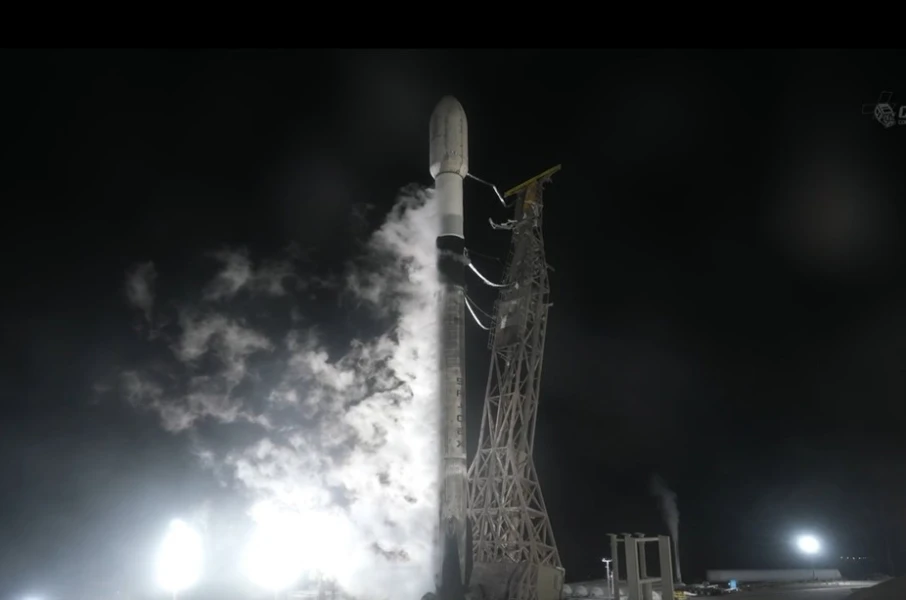
Four Greek thermal satellites were successfully launched on SpaceX’s SpaceX Falcon 9 rocket from Vandenberg Space Force Base in California.
Specifically, they are now in orbit around Earth as part of the National Microsatellite Program. It is a step that enhances the Climate Protection and the climate resilience of the country.
The system, developed by OroraTech, is the first national network designed for detecting and monitoring fires. With its use, Greece acquires a comprehensive surveillance tool. The prevention, preparedness and immediate response of the competent authorities are strengthened. The data will be integrated into the Government Earth Observation Hub, creating a single view for the Public Administration.
The four satellites feature advanced thermal sensors. They will provide near real-time imagery. They enable timely detection of hot spots and accurate recording of the evolution of fires.
In addition, they collect data on the temperature of marine waters, coastal areas and inland waters. They also cover different land uses, such as agricultural land, forests, cities and wetlands. These data enhance the monitoring of critical environmental and climatic parameters. Decision-making on the environment, agriculture and water resources is supported.

On the same mission, two experimental microsatellites were put into orbit. They will be used for applications such as ship detection, monitoring park flooding and earth changes. At the same time, Greek technologies will be tested, including optical laser communications.
The Hellenic Space Dawn mission is the first Greek twin CubeSat for Earth observation. The aim is to confirm new space applications, both in orbit and on the ground.


